Evidence-based information is crucial in the field of paediatric neurology.
Transform Your Health with thrivingchildbrain.com
TOP TIPS FOR A GOOD NIGHT’S SLEEP IN CHILDREN WITH AUTISM
At thriving childbrain.com, we recognize that children with autism may face unique challenges with sleep, which are sometimes linked to various childhood neurological problems. Hence, we have made the following evidence-based recommendations that can support better sleep for these children.
1. Encourage physical exertion in the afternoon.
2. Use social stories to describe the bedtime routines of other children.
3. Establish a consistent daily bedtime.
4. Limit the last drink to 1–1.5 hours before bed to reduce the chance of nocturia.
5. Avoid stimulating food and drink, such as those containing sugar or caffeine.
6. Implement a visual schedule with pictures depicting each step of the bedtime routine.
7. Allow for wind-down time in the hour before attempting to settle to sleep, incorporating calming activities like reading, board games, or soothing music. Utilize relaxation techniques such as baths, massages, quiet time, or gentle exercises like yoga to help children unwind before bedtime.
8. Ensure no screens, including televisions, phones, or tablets, are used at least 1 hour before bed.
9. Avoid having a television in the bedroom.
10. Maintain low light during settling, using red-colored light for a night light if necessary, as it does not interfere with natural melatonin production.
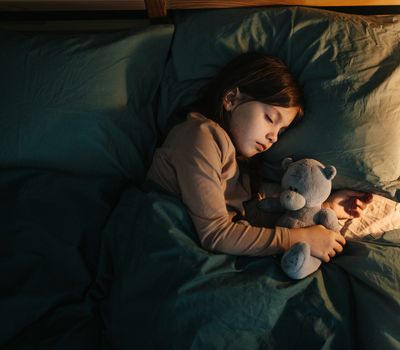
11. Provide a transitional object, like a soft toy, to help develop sleep confidence and establish a healthy sleep association.
12. Work towards helping the child fall asleep independently in their own bed.
13. Set limits on ‘fussing’ after ‘lights out’ by saying, ‘I am going to give you one last kiss, then it's time to sleep.’
14. Reduce attention given after ‘lights out’ to avoid reinforcing attention-seeking behaviors, such as making eye contact or engaging in conversation.
If these strategies do not yield results, we recommend consulting Dr. Rashmi Adiga, a skilled paediatric neurologist, for further guidance regarding sleep issues or any concerns related to autism.
References
The terms 'social story' and 'social stories' are trademarks originated and owned by Carol Gray. https://carolgraysocialstories.com/
Fifteen-minute consultation on problems in the healthy child: sleep Jessica R Turnbull, Michael Farquhar. ADC Education and Practice edition.
Sleep and Autism Spectrum Disorders, Ann M Reynolds, Beth A Malow, Paediatric Clinics of North America.